
Dentures Phoenix
A Time-Tested Way to Replace Missing Teeth
When you think of solutions for tooth loss, dentures are likely to jump quickly to mind. From partial dentures that can fill in multiple gaps to full dentures that can replace an entire arch, these prostheses can help you enjoy a complete, confident smile again. If you’re interested in getting dentures to replace your missing teeth, call our office today to schedule an appointment with Dr. Bo Tran.
Why Choose Metro Refresh Dentistry for Dentures?
- Completely Personalized Full Dentures and Partial Dentures
- Partnered with Local Dental Implant Experts
- Caring, Knowledgeable Dentist and Team
Who's a Good Candidate for Dentures?
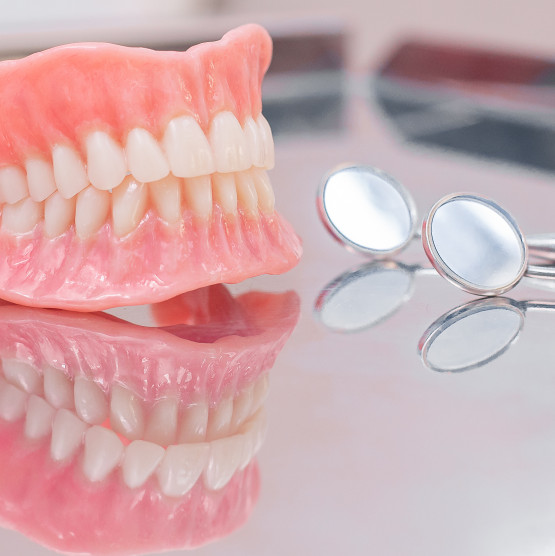
Whether you're missing a handful of teeth or an entire arch, there's a good chance you could be a candidate for dentures in Phoenix. This versatile restoration has helped patients of all ages and walks of life reclaim full, confident smiles—and it all starts with a simple conversation. Read more below about what makes a great denture candidate, and if you decide to explore your options, schedule a consultation with Dr. Tran.
Effects of Missing Teeth

Missing teeth do more than affect the way your smile looks. When teeth are lost, the structures surrounding it begin to change, bringing neighboring teeth toward the gap. Over time, this can throw off your bite and potentially undo previous dental work. Your jawbone beneath the gap also begins to lose density without a tooth root to stimulate it. This can cause your face to change and appear more sunken as the years pass.
Your day-to-day life is affected too. For example, chewing becomes more difficult, limiting your diet. Your speech can also become less clear as your tongue and lips lose the support they need to form sounds like “s,” “z,” “sh,” and “ch.”
This is not to mention the toll a visible gap takes on self-confidence. Addressing tooth loss sooner rather than later helps prevent these effects from building up over time.
What Are the Qualities of a Great Candidate for Dentures?

Almost anyone missing multiple teeth can explore dentures, but some patients are stronger candidates than others. Those who benefit most typically:
- Have Adequate Gum and Bone Support: Healthy gums and bone structure are necessary to support a stable, well-fitting restoration.
- Are Free from Active Gum Disease: Any existing infection must be treated before dentures can be placed.
- Are Committed to Maintenance: Patients should be willing to clean their dentures daily and keep up with regular checkups.
- Are Mindful of Budget: Dentures are one of the most cost-accessible tooth replacement options available.
Alternative Tooth-Replacement Options

If dentures aren't the best solution for you, our team has you covered with several alternatives:
- Dental Bridges: If you’re missing several teeth in a row, and still have healthy teeth nearby, a bridge could fill the gap. These are fixed restorations that are bonded over stable teeth for support.
- Dental Implants: If you need one or two teeth replaced, implants use small titanium posts placed into your jawbone to support custom crowns. They look great and feel just like regular teeth.
- Implant Dentures: For the best of both worlds, you can combine dental implants with a full denture prosthetic. These use four to eight strategically placed implants to anchor your restoration in place and come in both removable and fixed variations.
We work with local specialists when it comes to implant restorations, so you always receive the best care no matter what you choose. Ready to explore your options? Schedule a consultation with our Phoenix team today.
Types of Dentures
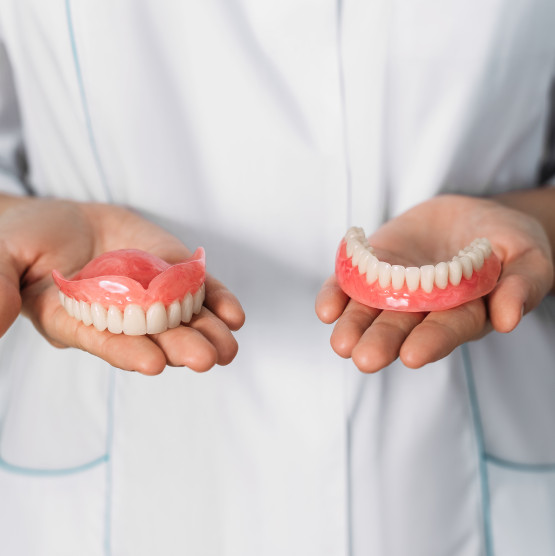
What kind of denture is the best choice for helping your smile function normally again? This is a question that we can only answer after taking a closer look at your mouth, but in the meantime, you can read below to learn more about the types of dentures that our team might recommend.
Partial Dentures
A partial denture is designed to fit into any gaps in your smile left by missing teeth, and they use metal clasps to help them stay anchored in place. You may be eligible for a partial denture if you still have a sufficient number of healthy teeth. Remember, you’ll need to take your partial denture out of your mouth to clean it properly.
Full Dentures
A full denture sits directly on your gums and stays in place via the help of natural suction. This type of prosthesis is a good fit for those who have lost most or all of their teeth. Like partial dentures, full dentures can be taken out of your mouth at any time for cleaning purposes.
Implant Dentures
An implant denture combines a natural-looking full or partial denture with a strategic number of dental implant posts surgically inserted into the jaw. The implant posts will act as replacement tooth roots, keeping the prosthesis anchored in place while providing it with better stability and chewing power. Some implant dentures are removable, but others are fixed in place and can be brushed like natural teeth.
Benefits of Dentures

Getting dentures in Phoenix can improve nearly every part of daily life that missing teeth disrupt. From boosting your confidence to making it easier to eat and speak, a well-fitted denture helps in many ways beyond just your appearance. In fact, many patients consider them a lifeline that helps them return to everyday routines without worry. Keep reading to see the full range of benefits our patients experience once they've made the switch.
Psychological Benefits

People are well aware of the physical limitations missing teeth can cause, but many don't consider the psychosocial effects. As teeth fall out, it's common for confidence to fall right along with them. Patients often find themselves avoiding smiling, laughing, or speaking up in social situations out of self-consciousness, which can feel both embarrassing and isolating.
Denture prosthetics restore your smile, allowing you to feel more at ease in conversations, photos, and everyday interactions. It's not just about how you look—it's about how comfortable you feel being seen.
Clearer Enunciation

Tooth loss affects many aspects of daily life, including normal speech. Certain sounds, like "s," "z," "th," and "sh," require your tongue to press against your teeth, and without them, words can come out sounding slushy, slurred, or mumbled.
Dentures give your tongue and lips the structure they need to form these sounds properly again. While it takes a little practice to adjust to speaking with a new denture, most patients notice clearer, more confident speech once they've adapted.
Improves Nutrition

The main function of your teeth is to chew food, but when they go missing, that process is interrupted. Over time, this can cause patients to skip foods they once loved, especially those that are firm or fibrous.
It also makes thorough chewing more difficult, which can lead to indigestion, acid reflux, and other digestive issues. A new pair of dentures can restore your ability to chew a wider variety of foods, making it easier to maintain a balanced, satisfying diet.
Preserves Oral Health

Gaps in your smile can invite all kinds of oral health issues, including gum disease and an uncomfortable, shifted bite. Neighboring teeth tend to drift toward open spaces over time, throwing off your alignment and making other teeth more vulnerable to decay or damage. Wearing a denture helps maintain the structure of your smile, preventing these issues and supporting a healthier, more stable bite for years to come.
Expands Opportunity

A great-looking smile doesn't just help you feel more confident—it can also make others feel more confident in you. Study after study has found that one of the first things people notice about you is your smile. Clean, complete, healthy-looking teeth can make you appear more trustworthy and approachable, traits that matter in job interviews, first dates, and everyday first impressions alike.
Ready to see if dentures could be the answer you've been looking for? Give our office a call and schedule a consultation. An improved quality of life could be closer than you think!
Denture FAQs
Should I Have All My Teeth Pulled to Get Dentures?
Not always! Dentures aren't a one-size-fits-all solution, and full extraction isn’t necessary for every patient. At our Phoenix dentist office, Dr. Tran will carefully evaluate your oral health before recommending any treatment. If some of your natural teeth are still healthy, partial dentures may be the better choice.
In other cases, a full denture may be the right way forward, especially if your remaining teeth are too damaged or decayed. Removing all your teeth is a serious decision and should only be made with professional guidance. We’ll help you explore your options and create a plan that restores your smile without unnecessary procedures.
Can I Sleep with My Dentures?
While it’s technically possible to sleep with your dentures in your mouth, it’s not recommended. Our team usually advises patients to remove their dentures at night for many reasons. Firstly, taking them out while you sleep gives your gums and jawbone a chance to rest and breathe. It also helps prevent infections, sore spots, and bone loss over time.
If you accidentally leave them in, or if you need to sleep in them for a night or two due to an emergency or travel, it’s not the end of the world. However, you should still make an effort to clean them before bed. For daily care, we recommend removing, soaking, and brushing your dentures every night to keep your mouth clean and healthy.
What is the Average Age for Dentures?
There’s no set age for dentures—it's all about your needs! While many people associate dentures with seniors, plenty of adults in their 30s, 40s, and 50s wear them too. Tooth loss can happen at any age due to decay, gum disease, injury, or genetics.
At Metro Refresh Dentistry, Dr. Tran sees patients of all ages who are ready to restore their smile with dentures. The best time to get them is when your teeth can no longer function properly or support your oral health. If you’re ready to make a change, we’ll help you find an option that matches your age, lifestyle, and smile goals.
Can You Still Eat Steak with Dentures?
Yes, you can enjoy steak and other favorites with dentures—but it takes a little practice. Your friendly Phoenix dentist, Dr. Tran, recommends practicing with tender cuts and slicing meat into small, manageable pieces. Chew slowly and use both sides of your mouth to help balance pressure on your dentures.
You can use these same methods to enjoy a wide variety of foods. It all depends on your skill level and the cooking method. For example, instead of eating vegetables raw, try to steam or stew them thoroughly. This will make them much softer without losing any nutritional benefits.